| |
 |
 |












|
|
|
 |
 |
|
Kandy
Kandy-a major tourist destination-is
also known as the cultural capital of Sri Lanka. Nestled in the
hills at an altitude of 488 m, it is located at a distance of 115 km
from Colombo.
Kandy has a rich history. It was originally known as Senkadagala
pura after a hermit named Senkada who lived there. Many of Sinhalese
people call it Mahanuwara meaning the Great City. The name Kandy was
derived by the colonial rulers from the word Kanda in Sinhala,
meaning a hill. Kandy was the stronghold of the Sinhalese kings, who
promoted and protected the local culture until the city fell to the
British in 1815.
Today a bustling commercial city, Kandy is famous for the Kandy
Perahara-a huge cultural pageant that takes place in the month of
July or August. It is one of the most colorful processions of the
world. Thousands of drummers and dancers accompanying a parade of
ornamented elephants perform in the streets of Kandy. The leading
tusker carries the sacred tooth relic of Lord Buddha, while the
spectators pay homage to it. The procession moves along the streets
for seven consecutive nights and concludes on the day of the August
full moon.
Top Attractions in
Kandy
|
The Temple
of Tooth Relic: Also known as Dalda Maligawa, it is
one of the most sacred Buddhist pilgrimage sites in the world.
Here, one of the Buddha's teeth is kept. The temple was built in
the 17th century. A golden canopy has been added recently. Daily
rituals are performed three times a day-at 4.30 a.m., 10.30
a.m., and 6.30 p.m. respectively. |
|
|
|
|
|
Gadaladeniya Temple: Built in 1344, the temple is
situated on a hilltop at a distance of 15 km from the town. The
temple is inspired by Dravidian architecture and gives a
spectacular view of the surrounding countryside.
|
|
|
|
|
|
Embekke
Temples: This 14th century temple is famous for the
intricate wooden carvings dedicated to God Katargama. Almost the
entire structures of some wooden buildings are decorated with
dancers, musicians, wrestlers, legendary beasts and birds.
Nearby are the ruins of an ancient rest house with similar
pillars carved in stone.
|
|
|
|
|
|
Lankatilaka Temple: Lankatilaka temple dates back to
14th century. It is built on the summit of a rock called
Panhalgala. The temple provides a magnificent panoramic view of
the surrounding hills, paddy fields and the diverse vegetation
around it.
|
|
|
|
|
|
Peradeniya
Gardens: The garden-a paradise for nature lover- was
built in 14th century during the reign of king Vikrama Bahu III.
The best-known attraction of the garden is the orchid House,
which houses more than 300 varieties of exquisite orchids. A
spice garden located here gives you a first hand account of the
trees and plants used in the traditional Ayurvedic medicine.
|
|
|
|
|
|
Udawatte
Kele: Udawatte Kele is a primeval forest located
above the Dalada Maligawa. It is also known as the Forbidden
Forest of the Kings of Kandy. It contains a variety of trees
such as Talipot trees, cinnamon, olive, rattan cane, betel, bo-trees,
kitul palms, jak, mara, betelnut and arecanut. . |
|
|
|
|
|
Hanthana
Mountains: Hanthana Mountains are spread on the
outskirts of Kandy and are a source of many rivulets and
streams. They are an ideal destination for the trekkers.
|
|
|
|
|
|
Knuckle
Mountains: The Knuckles range is about 90 square
miles in extent and is a detached block of the central highlands
separated from the main highlands by the the Dumbara Valley.
There are 35 peaks rising to more than 3000 feet (915 m) in the
Knuckles range. It has a rich variety of flora and fauna.
|
|
|
|
|
|
Anuradhapura:
Anuradhapura,is one of the
ancient capitals of Sri Lanka, world famous for its well
preserved ruins of the Great Sri Lankan Civilization. The
city now a UNESCO heritage site, lies 205 km north of the
current capital Colombo in the North Central Province of Sri
Lanka.
Polonnaruwa:
The second most ancient of Sri Lanka's kingdoms, Polonnaruwa was
first declared the capital city by King Vijayabahu I, who
defeated the Chola invaders in 1070 CE to reunite the country
once more under a local leader.
Kandy:
Kandy is the
English name for the city of Maha Nuvara (Senkadagalapura) in
the centre of Sri Lanka. It is the capital of the Central
Province and Mahanuvara District. It lies in the midst of hills
in the Kandy Valley which crosses an area of tropical
plantations, mainly tea.
Nuwara
Eliya:
The town was founded by
Samuel Baker as a hill retreat for the British during the
colonial era, where typical English pastimes including fox
hunting, polo and cricket were played.
Many of the buildings retain features from the colonial period,
and even new hotels are often built and furnished in the
colonial style.
Galle:
Galle is a town situated on
the southwestern tip of Sri Lanka, 119 km from Colombo. Galle
was known as Gimhathiththa (although Ibn Batuta in the 14th
century refers to it as Qali) before the arrival of the
Portuguese in the 16th century, when it was the main port on the
island.
|
|
|
|
|
Home | About
Sri Lanka | FAQs | Travel
Tips | Contact
Us |
Designed by eDesigners |
|
|
|
|
 |
|
| |
 |
| |
|
| |
 |
| |
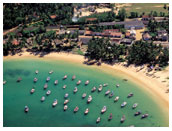
Sea, Sun and Sand :
|
| |
No matter what time of the year, you can find a beach that is in
season and just waiting to welcome you to this warm sands.
|
| |
|
| |
 |
| |
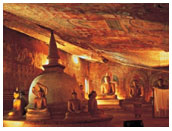
Ancient Cities and Culture
:
|
| |
Island that is an eclectic mix of its colonial history, religious
traditions and South Asian influence. Sri Lanka’s unique culture,
which is authentic to this island, brings together its pluralistic
identity. |
| |
|
| |
 |
| |
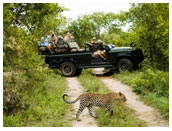
Wildlife Safari :
|
| |
Sri Lanka has strived to provide sanctuary and protection to it's
beautiful wildlife. There are many wild life reserves, nature parks
and sanctuaries established throughout and extremely popular with
local and overseas visitors. |
| |
|
| |
 |
| |
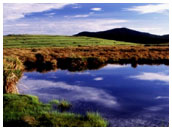
Nature Trails , Fauna & Flora :
|
| |
Scenic routes, a hint of adventure and the most diverse flora and
fauna you’ve ever seen. The island is your very own tropical voyage
waiting to happen. |
| |
|
|
|
 |
| |
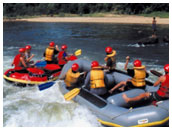
Adventure Tours
:
|
| |
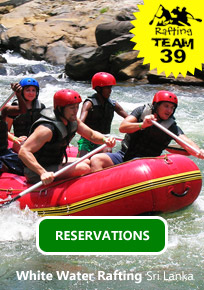
There is simply nothing a tourist could not do in Sri Lanka. We
offer the guided activities like Tracking, bird watching, jungle
safaris, diving, white water rafting etc. |
| |
|
|
|